

Hey, it’s Doug! Did you miss me? I’ve descended the glaciers of Alaska to deliver you this week’s newsletter, which is the second installment of my favorite new series: One Big Thing, where Heather and I get personal about the biggest financial decision we’ve made this quarter.
Speaking of renovations, we’re going to be soft launching some design changes in the newsletter. See anything new? Keep your eyes peeled!
Heather and I have decided to take the first steps in a major home renovation. We don’t have any permits yet, but we’ve hired an architect, aligned our visions, and made enough big decisions that I think it’s worth sharing more with you today.
First, I want to tell you how we got here.
Heather, Baby Hazel, and I left New York City for the suburbs in 2016. She writes about this in Money Together, and she does it more honestly than I ever could, but the TL;DR version is that we stretched ourselves financially and took on more risk than we were comfortable with to get into our current house. We were never going to get everything we wanted, but after countless weekends in bumper-to-bumper traffic with a newborn, dragging ourselves through open houses until we were ready to give up, we found a pretty decent home in a town we loved. We were honest with each other about going to the edge of our budget, and we agreed it was worth it. We also agreed that if we kept investing in our careers, and in each other, we’d be able to upgrade someday. We hoped.
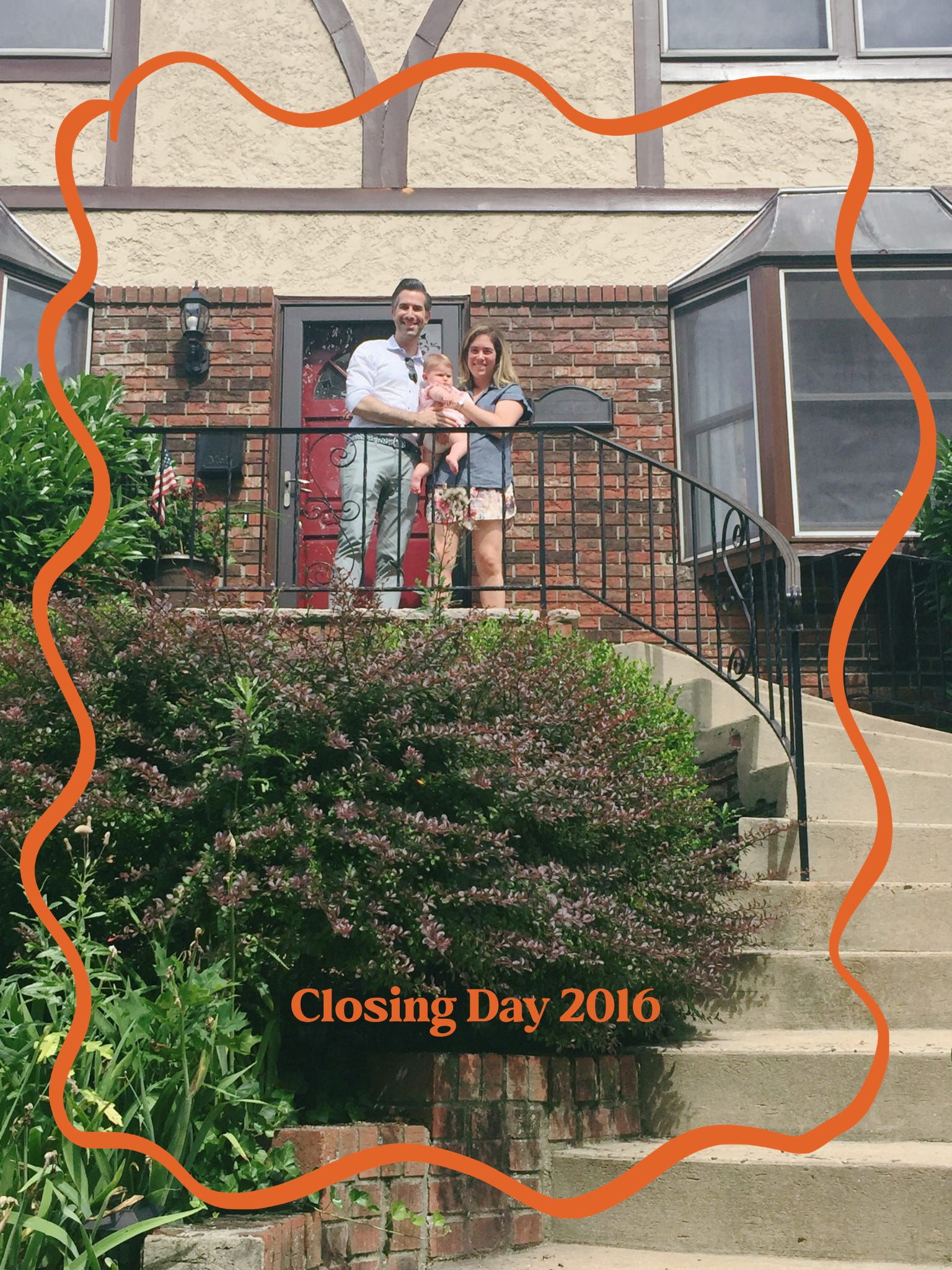
Let me be clear: we don’t need a bigger house. We just wanted one. We set a joint goal, and we’ve been working towards it for ten years.
In a sense, we’re just a couple finding new ways to reach our goal when the landscape around us has changed. This is different than solving a problem when your back’s up against a wall, and it’s an important distinction in our thought process.
As our careers grew, so did our savings and our shot at the next house. But then, the pandemic hit. Rates went to zero (we refinanced under 3%, thank you very much), and home prices skyrocketed. Demand surged, supply collapsed, and people were buying houses all-cash, sight unseen, waiving inspection, and engaging in bidding wars that made little financial sense for us.
What surprised me is how little of that has unwound in the years since. In fact, we sat down with a realtor in March, and he told us that historically, for that time of year, there should be around 130 homes on the market in our town. That day, however, there were a whopping total of nine. On top of that, he had five families sitting in luxury rentals waiting to pounce on the next listing, mostly with cash.
Yeah, no thanks.
This situation isn’t special to us. All around the country, the U.S. housing supply gap widened to an estimated 4.03 million homes in 2025, according to Realtor.com’s 2026 Housing Supply Gap Report, and housing supply growth has slowed significantly in low-density areas, particularly where home prices are higher. Even with mortgage rates well off their lows, demand has stuck around.
Translation: popular towns where families want to live have the least amount of inventory.
The lock-in effect is very real. A survey from This Old House found that 91% of homeowners said they didn’t plan to sell in 2025, with many citing rising home prices and mortgage rates as their top reasons for staying put. So, people with 3% mortgages aren’t going anywhere, which keeps supply tight, which keeps prices high, and fewer buyers can afford to play the game. Even the ones who can are realizing it looks a whole less attractive.
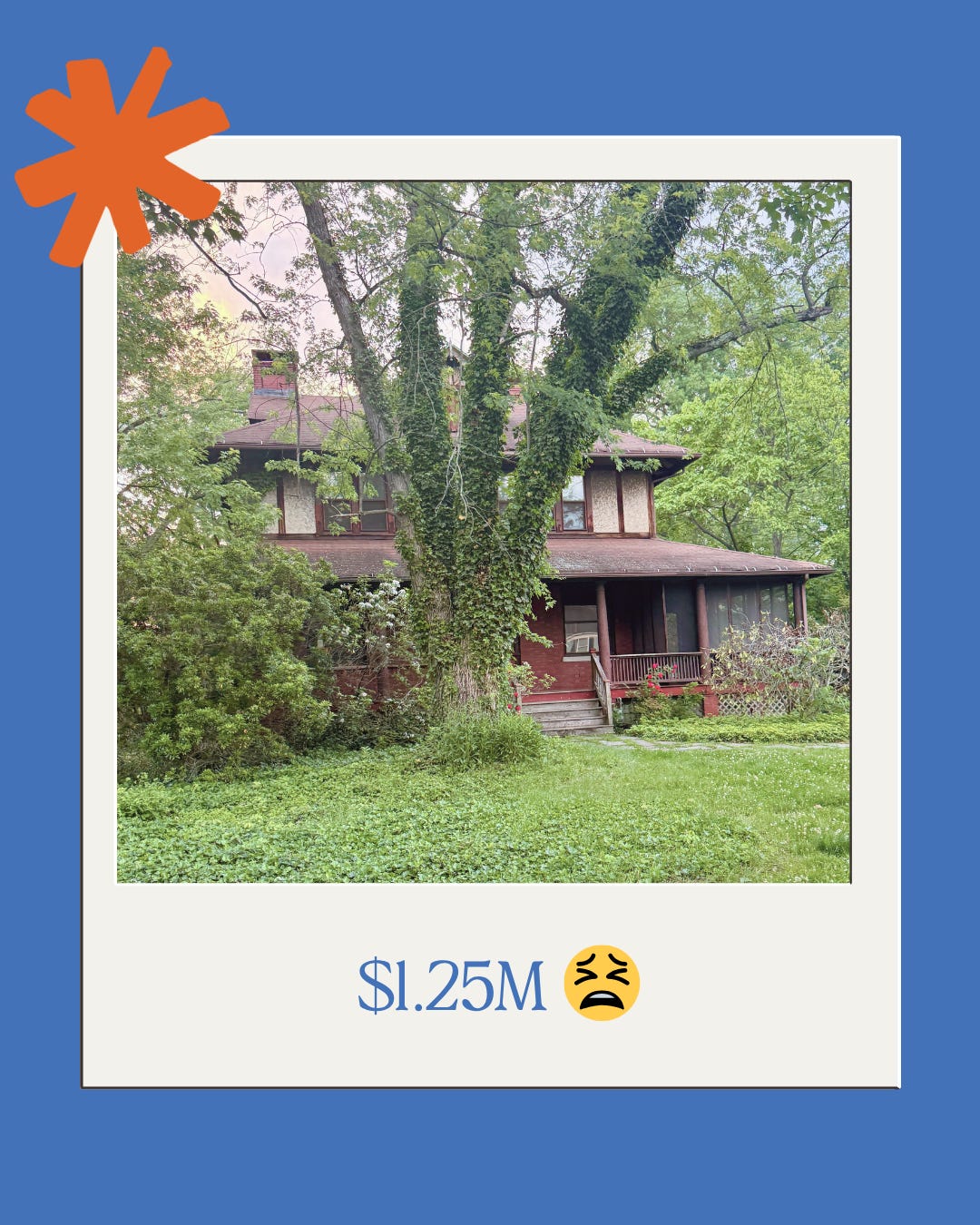
Speaking with our realtor and mortgage lender, the math did not math. We would be those sellers giving up a sub-3% mortgage to take on a new one two-to-three times the size and rate, while also competing against buyers doing desperate things like waiving their rights to an inspection.
Assuming we could afford the move, would we even get what we wanted? The larger homes with good bones in our neighborhood need a mortgage’s amount of work, and they still cost the amount that a new build did six years ago. And the ship has all but sailed on new builds unless we wanted to move neighborhoods or to the town next door, which we no longer want to do.
We’re not alone in our thinking, because if you drive around town, you’ll see dumpsters in driveways and construction fences on just about every street. Two of our friends are in the middle of whole-home renovations right now. All this is not anecdotal. About 48% of homeowners planned to make renovations in 2025, with a meaningful chunk doing it specifically because they don’t want to sell into this market.
The lock-in effect isn’t just freezing inventory; it’s clearly redirecting capital from “dream house” budgets into “current house” budgets.
In anticipation of moving someday, we’d long sworn off doing any substantial work on our home. We’ve done smaller stuff over the years like painting, adding a dining bench in our kitchen, refinishing the fireplace, and moving some trees around out back, but never anything close to a real renovation. We haven’t even touched our beat-up floors, because we figured the kids would just destroy them. Spoiler alert: they did.
All this prompted Heather and I to make a list of what our current home would need to give us to satisfy what we’d been looking for in a new home. In case you’re curious: we love to cook and wish we had a better space to entertain, so a new kitchen is top of the list. We also need a mudroom, because everyone enters through the back, which spills directly into the kitchen. We want to squeeze a couple more feet into our living room, if possible, and bring the laundry from the basement to the main floor. Then, there’s the attic, which has always been a candidate for a finished office.
By the end of our brainstorm, we realized we might be able to get most of the house we’d been chasing without leaving the house we’re in. We’d keep our mortgage, our schools, our neighbors, and our sanity. We realized, this is worth a hard look, even knowing that a project this size is realistically a two-year affair.
Renovating will let us keep our sub-3% mortgage in place, which is the single biggest financial reason we’re considering it. We can fund the project with a lot of flexibility using a combination of a HELOC and the cash we’ve saved. This would allow us to move at our own pace rather than the market’s. We don’t need to feel the way we felt when we bought this house in 2016, betting on ourselves and praying the math eventually would work out.
This is a great example of what flexibility looks like in real life. It’s not about making the obvious move but about embracing options to make a better one when the planned move stops making sense.
I want to be mindful about how this comes off, because I don’t want you reading it as Heather and I giving up on a goal. We’re not. A renovation doesn’t take that goal off the table; it just changes when and how we might get there. We’re still investing in ourselves, still growing the business, still pushing toward the kind of life that gives us choices later down the road. If anything, putting money into this house builds some equity we can deploy later, but it also gives us a place we love living in while we keep building.
In our book, Heather writes that there are a million ways home.
None of us really know what will happen next in our lives. We try to convince ourselves that we do, but we just don’t. When you embrace that fact, you can be easier on each other when the plan changes.
And this is exactly what’s happening to us now. The version of this home goal we’d been carrying for a decade was one thing, and the version we’re starting to explore now is another. Both can get us where we want to be.
However, I have to give Heather a ton of credit. This goal mattered to both of us, but it mattered more to her. I’m both a simple creature and a creature of habit—the kids are happy, and I like my neighbors. We each took a step off our pedestals of comfort to come up with a new solution, and that, right there, is our hard work paying off.
So, this is our One Big Thing for this quarter. Interestingly enough, between drafting this newsletter and publishing it, our architect gave us a first look at what he’s coming up with. We’re excited, and who knows, maybe we’ll enter our HGTV era soon…
Are you in the middle of a reno, or have you lived to tell the tale? Share with us your words of wisdom! I’m sure this will all become an ongoing discussion here.
Just married? Your taxes changed more than your last name.
Brought to you by Gelt.
Combining two incomes can quietly push couples into a higher bracket and a bigger bill, especially for business owners and high earners. Gelt pairs you with a dedicated tax advisor and smart technology that plans year-round, so you and your partner stop overpaying and keep more of what you built together. See what proactive tax strategy looks like at joingelt.com. #sponsored

Want to go deeper? Money Together is everything we’ve learned about love and money, told through real stories with lessons for couples who want to build a financial life together without losing themselves in the process. Order your copy on: Amazon, Barnes & Noble, Bookshop, or Audible (narrated by Heather!).
Love it already? A review on Goodreads and wherever you purchased helps other couples find us and means more than you know.
Bring us to your organization! We speak on money, relationships, and what it really takes to build a financial partnership that lasts. Available for corporate events, conferences, and private engagements — virtually and IRL. Reach us here.
Connect with us on social: @averagejoelle + @dougboneparth
The content shared in The Joint Account does not constitute financial, legal, or any other professional advice. Readers should consult with their respective professionals for specific advice tailored to their situation. The information contained in this post is general in nature and for informational purposes only. It should not be considered as investment advice or as a recommendation of any particular strategy or investment product. This post is not a solicitation or an offer to buy or sell any specific security. Bone Fide Wealth cannot guarantee the accuracy of information from third parties.
I love this willingness to adapt. And, as someone who wants to buy a home in the next couple of years, I want y’all to get moving! 🤣
We are 99% finished with a kitchen renovation that we did most of ourselves and it took one year. Next is the full basement finishing and adding a bathroom so that our boys can have separate bedrooms and we can have an office. After that will be the two main floor bathrooms. Luckily we bought in 2009 and have enough wiggle room to make our small ranch house work for us for a long time.