
The invisible costs of yards
The mow-and-blow guy cuts the grass. Everything else is on you.

Hi there. It’s Douglas, back with another edition of The Invisible Costs series here on The Joint Account. For those unfamiliar, Heather and I hunt down the sneaky hidden expenses and explain how they show up in your everyday lives. We’ve previously covered childcare, college, travel, oil, and more. This time, we’re getting our hands dirty.
Here’s the trap: you hire a “mow and blow” service for a set monthly cost and assume your yard is pretty much taken care of. But then, you quickly learn that affordable monthly cost buys you fresh-cut grass and cleared clippings and almost nothing else. All the other stuff that keeps your yard from getting side-eyed by your retired neighbor shows up unexpectedly; and boy, does it pile up.
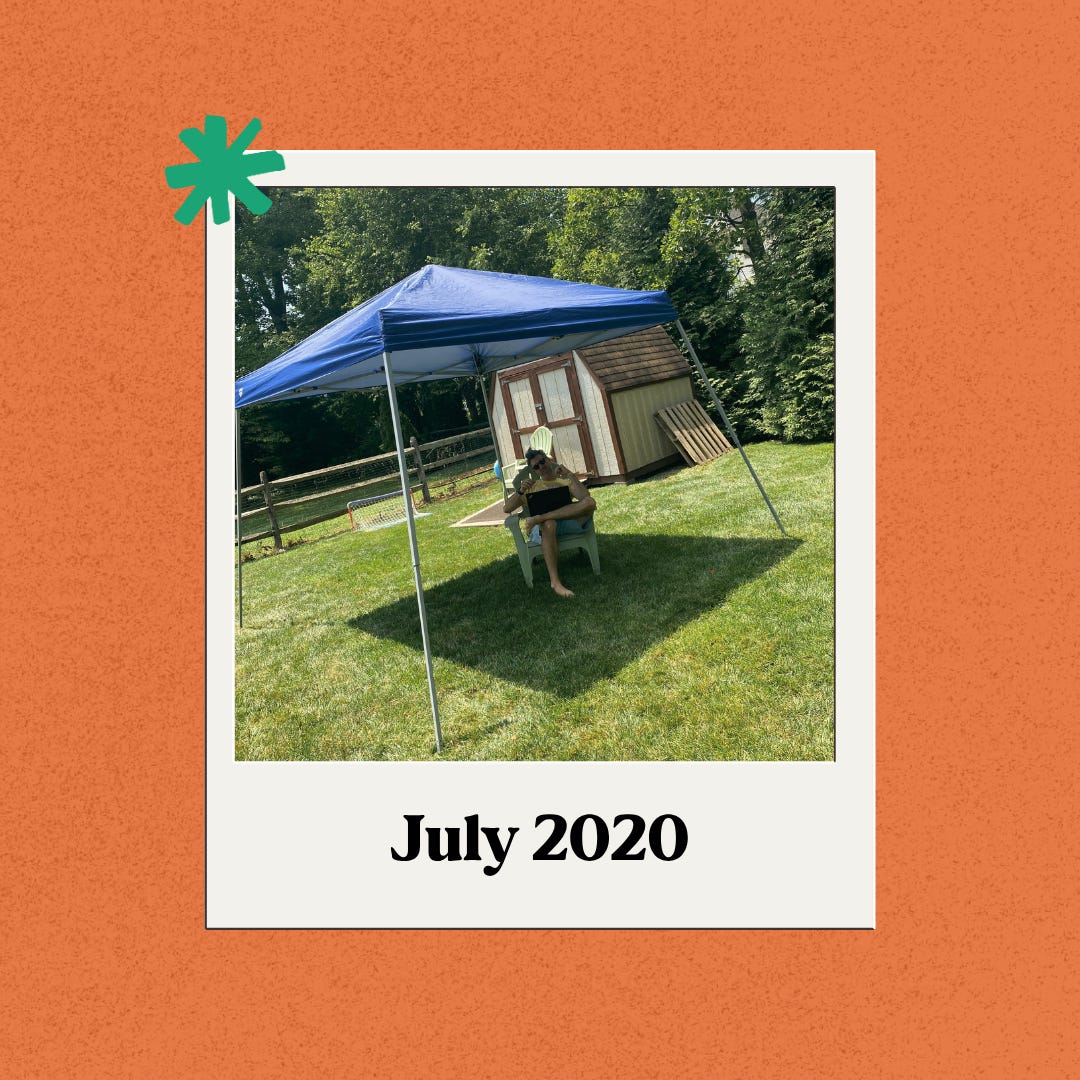
When we first moved to New Jersey, we had one young kid, and I had all the time in the world to tend to my little patch of earth. I liked it, and to be honest, I still do. But Kid Number Two was the beginning of the end of our free time. The hours I used to pour into the yard now get poured into playing catch, riding bikes, drop-offs, pickups, you get the idea.
So, I outsource most of the work to keep our yard in shape. Plenty of people still do it all themselves, and honestly, good for them. I wish I could, but my time just isn’t there right now, and I still want the place to look good. That trade—my time for someone else’s—is where most of these hidden costs sneak in.
For this edition of The Invisible Costs, let me walk you through everything the mow-and-blow guy skips on his way out to the next house.

Seeding. Grass isn’t permanent. You’re basically renting it. Between aeration, dethatching, and overseeding to fix the thin, patchy, and bare spots, you’re looking at anywhere from $300 to $1,350 to reseed an entire lawn, per HomeGuide. And this is not a one-and-done thing. Cool-season lawns like ours want it in the fall and sometimes again in spring. And of course, there’s always one patch in the shade that never takes no matter what you throw at it.
Fertilizing. A green lawn is an ongoing chemistry experiment. Most lawns need three-to-four feedings a season, and a professional fertilization and weed-control program runs $400 to $800 a year. Anyone who read last month’s oil edition of The Invisible Cost series will enjoy knowing that fertilizer leans on fossil fuels (esp natural gas), so the same energy costs I just complained about are affecting your grass, too.
Weeding. Most mow-and-blow service contracts are for grass only, so weed control in your beds and borders is either a paid add-on or entirely your problem. A broadleaf weed treatment runs $50 to $125 a pop, and even then, weeds are relentless. They always find their way back, which means you’re either paying for that treatment again or spending your one free weekend day on your knees in the mulch, pulling them out by hand. Fun!
Leaf cleanup. For those of us who have a fall season, this one that sneaks up every single year, right on schedule. When the whole canopy comes down, you’re beyond a quick pass with a blower. You’re paying for multiple visits, because leaves don’t have the courtesy to fall all at once, plus it needs to be hauled away. A single fall cleanup averages around $525 and can run up to $850 depending on the size of the property, per Angi. And it commonly costs two-to-three times your normal mowing price when the leaves really pile up! “Mo’ trees. Mo’ problems.” It’s a lyric. Look it up.
Watering. This one hides inside a different bill altogether: your water bill. If you’ve got an in-ground sprinkler system, congrats. I am jealous. But that convenience isn’t cheap. Installation runs roughly $2,500 to $4,800 for a typical yard. If you’re not in a warm weather environment, you’re also paying $50 to $150 every fall for a blow-out and again every spring for startup (so the lines don’t freeze and crack over winter). Add that all up and a $4,000 system really costs $6,000 to $10,000 over its first decade. No system? Then it’s you, a hose, and a sprinkler you drag around like it’s 1994. Note: I bought an OtO sprinkler system to make our non-sprinkler system life easier. Check it out.
Mulching. Here’s one that crushes me. Mulch. It disappears! Who knew? So, you end up buying it again every spring. At $50 to $150 a cubic yard delivered and installed, per HomeGuide, and a typical property needing several yards, this “finishing touch” is a recurring line item forever. Longtime readers know I’ve called mulch the most expensive confetti you’ll ever buy, and I still stand by that claim. Oh, apparently brown mulch is cheaper than black mulch. You might want to keep that in mind.
Moving or removing plants and trees. Now the big one, because trees don’t live forever and dead ones aren’t free to deal with. Tree removal averages around $750 to $900 and climbs past $2,000 for anything super big or hard to reach. But here’s my favorite invisible cost of all: plants you choose on purpose that create expenses you never see coming. We once put in some lovely pollinating bushes and moved some fruit-bearing trees, feeling very good about ourselves for supporting the local ecosystem. The local ecosystem showed its gratitude by sending a parade of birds to feast, and those birds, in turn, redecorated our outdoor table with a level of enthusiasm I wouldn’t describe over a meal. Nature’s beautiful like that!

As with every edition of The Invisible Costs, the yard is just an example. The real lesson is that the cost of a thing is almost never the number you’re quoted. It’s the trail of smaller expenses that follow it home and arrive one season at a time.
Where has your yard drained your wallet?
Got an idea for the next edition of The Invisible Costs? Let us know.

Want to go deeper? Money Together is everything we’ve learned about love and money, told through real stories with lessons for couples who want to build a financial life together without losing themselves in the process. Order your copy on: Amazon, Barnes & Noble, Bookshop, or Audible (narrated by Heather!).
Love it already? A review on Goodreads and wherever you purchased helps other couples find us and means more than you know.
Bring us to your organization! We speak on money, relationships, and what it really takes to build a financial partnership that lasts. Available for corporate events, conferences, and private engagements — virtually and IRL. Reach us here.
Connect with us on social: @averagejoelle + @dougboneparth
The content shared in The Joint Account does not constitute financial, legal, or any other professional advice. Readers should consult with their respective professionals for specific advice tailored to their situation. The information contained in this post is general in nature and for informational purposes only. It should not be considered as investment advice or as a recommendation of any particular strategy or investment product. This post is not a solicitation or an offer to buy or sell any specific security. Bone Fide Wealth cannot guarantee the accuracy of information from third parties.